
Solar Inverter Guide: Comparing On-Grid, Off-Grid and Hybrid Solar Inverters
While solar panels capture sunlight, the solar inverter is the undisputed brain and nerve center of your solar power plant. It converts raw Direct Current (DC) into clean, phase-synchronized Alternating Current (AC), tracks the Maximum Power Point (MPPT) of your module strings, and regulates electrical safety. Choosing the right inverter type determines your system's efficiency, reliability, and functionality.
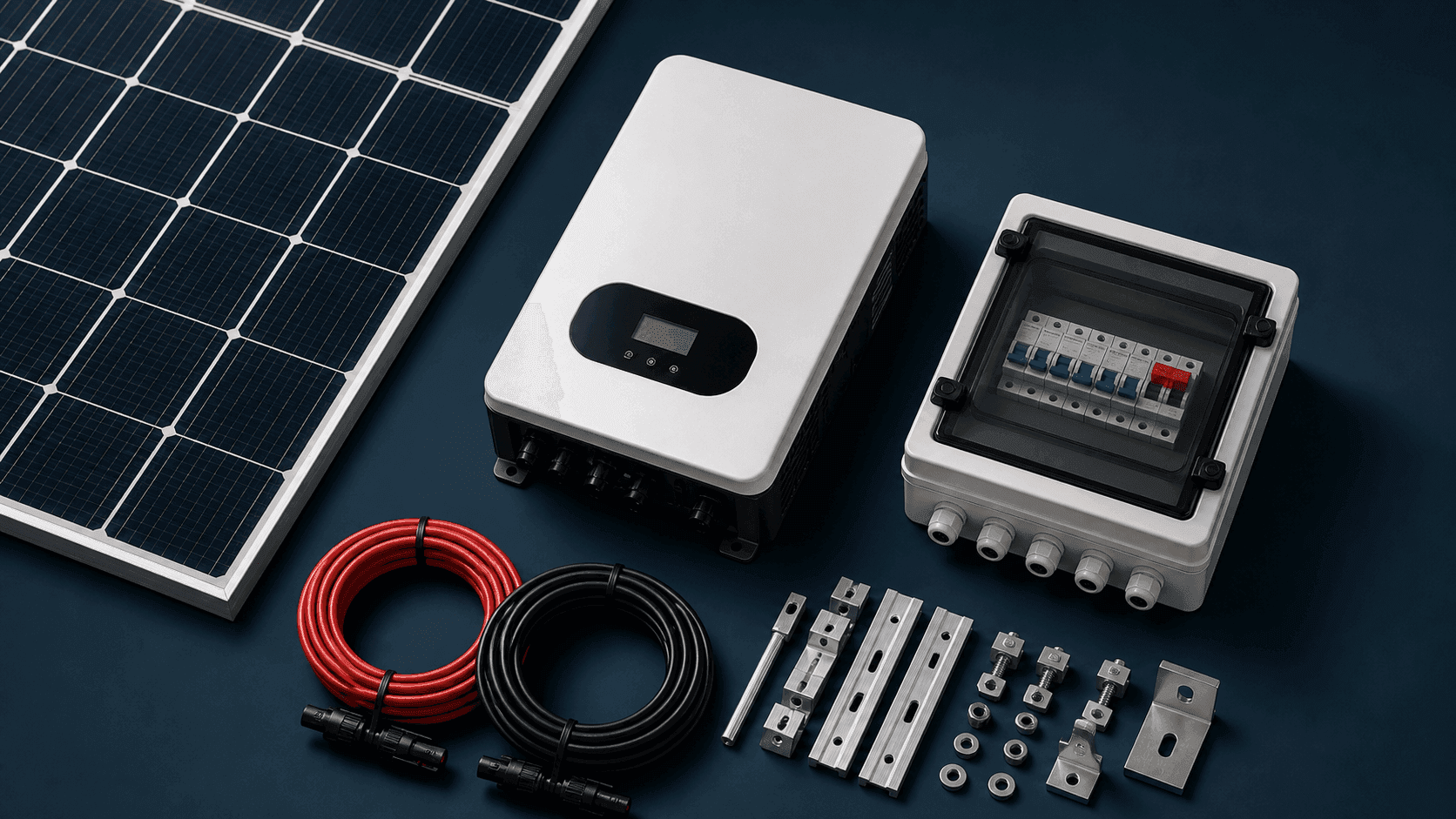
Key Engineering Takeaways
- On-Grid inverters provide the highest efficiency (98%+) and fastest ROI with net metering.
- Hybrid inverters offer uninterruptible battery backup while still supporting grid export.
- Dual-MPPT trackers maximize generation from multi-faceted or partially shaded roofs.
- Built-in Wi-Fi / 4G telemetry provides instant fault diagnostics and mobile performance monitoring.
1. On-Grid (Grid-Tied) String Inverters
On-Grid inverters are designed to work in synchronization with the utility grid. They do not require battery storage, making them the most affordable, highly efficient (97.5% - 98.8%), and durable inverter option with a typical design life of 10 to 15 years.
Under national anti-islanding safety regulations (IEEE 1547 / IEC 62116), on-grid inverters immediately shut down within milliseconds when grid power fails, protecting utility linemen working on downstream distribution cables.
2. Hybrid Solar Inverters
A Hybrid Inverter combines the intelligence of a grid-tied inverter with the battery backup capabilities of an off-grid inverter in a single, compact unit.
During normal grid operation, it powers your home and exports surplus solar electricity for net-metering credits. When a grid blackout occurs, an internal high-speed automatic transfer switch (ATS) isolates your home from the grid and draws power from lithium or tubular batteries within 10 milliseconds, ensuring your lights, fans, Wi-Fi, and refrigerators never lose power.
3. The Role of Maximum Power Point Tracking (MPPT)
Solar panels deliver variable voltage and current depending on solar irradiance and temperature. Advanced MPPT algorithms constantly sweep the I-V curve multiple times per second to extract the maximum possible electrical wattage under all weather conditions.
Dual or multi-MPPT inverters allow you to connect solar strings facing different directions (e.g., East and South) without power mismatch losses.
Get Local Solar Engineering Support
Ready to calculate solar feasibility for your property in Bihar?
Speak with our Hajipur engineering team for honest advice, shadow analysis, and PM Surya Ghar subsidy application processing.